6 min read
When it comes to Halloween decor, it’s all too easy to blur the line between charming and tacky. While plastic pumpkins and polyester webs have become the norm, there’s so much more you can do to elevate your home’s entire look.
We asked designers for their best tips for creating tasteful, festive Halloween looks without looking like you pulled your home straight from a party store catalog. According to our industry experts, the key to pulling off an elevated Halloween look is less about covering every surface and more about curating a mood—and remembering the secret recipe: restraint, texture, and tone.
As designer Lauren Saab of Saab Studio puts it, achieving balance is less about props and more about the overall aesthetic. "It’s about the atmosphere.” Read on for our guiding principles for keeping your Halloween decor elegant, not excessive.
Additional copy by Alyssa Khan.
Restraint Is the Real Magic

The pros agree: When it comes to Halloween decor, restraint is your greatest design tool. Instead of filling every nook with pumpkins and potion bottles, focus on one or two areas and build around a single idea.
“Overcrowding is the most common decorating mistake someone can make,” Saab says. “A single dramatic moment is all you need.”
That “moment” might be a cluster of moody taper candles on a mantel, a single branchy floral arrangement in a deep crimson vase, or a simple display of white pumpkins on your entry console. Caroline Kopp, founder of her eponymous design firm, calls it “repetition over accumulation.” By choosing one motif and repeating it for visual impact, you avoid creating dozens of different themes that compete for attention.

Designer Amy Pigliacampo agrees, noting that consistency trumps abundance.
“Pick one idea and be consistent with that versus mixing ALL the things,” she says. Her advice? Leave some breathing room; a little negative space keeps things feeling deliberate and lets your most dramatic pieces shine.
In other words, instead of conjuring chaos, create composition. A pared-back approach gives your decor a confidence that feels stylishly understated—more “mysterious manor” than “haunted house.”
Your Materials Matter

Even more than color or theme, what truly defines sophisticated Halloween decor is materiality. Each designer made a point of suggesting homeowners skip the plastic.
“Plastic is going to look cheap and tacky,” says Suzette Conrad of Bolt Builders. “But amber glass, matte black metal, dark wood, and velvet are going to look elegant.”
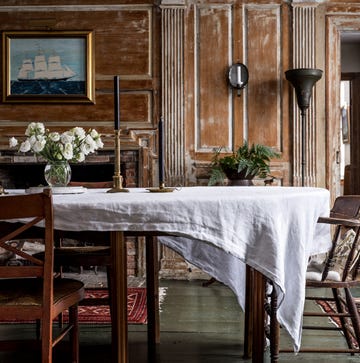
Quality finishes and tactile textures instantly elevate even the simplest styling choices. Brass candleholders with dripping tapers, glass pumpkins that catch candlelight, or weathered wood bowls filled with dark fruit create atmosphere without cliché.
Saab loves the idea of “mixing natural textures, candlelight, and darker flowers” for a look that feels layered and warm, instead of gimmicky.


Think beyond obvious “Halloween” decor, too. Pigliacampo often leans on everyday pieces, like ceramics, plants, and vintage finds that simply nod to the season. “Creepy candlesticks, metals, ceramics,” she says. “It depends on the style of the home, but a light touch is always better and looks more expensive.”
House Beautiful's style editor at large, Lucy Bamman, suggests foraging through your own backyard for the perfect decor accoutrement. "I love to decorate for Halloween with seasonal floral and fauna," she says. "Maple, oak, pumpkins, gourds, stalky corn, potted yarrow, and black-eyed Susans are all plentiful this time of year."

One big caveat to this rule, that Bamman notes, is to know your audience. "If your kids are of that special age where gigantic plastic spiders will make them squeal with glee, then by all means, figure out a way to install the biggest plastic spiders you can find on the very front of your house," she says. "These years don’t last forever; there is plenty of time in your future for a perfect Martha Stewart-inspired pumpkin and haystack masterpiece by your front door."
Go Moody in the Right Ways

Nothing dates a Halloween display faster than the standard orange-and-black combo. Instead, designers favor deeper, moodier palettes that feel cinematic and unexpected. Conrad likes starting with black as a base—“chic, goes with anything, and a good foundation for Halloween”—and layering on tones like burgundy, wine, and dark cream. The result feels romantic, a little Victorian, and wonderfully atmospheric.
Saab takes a softer approach: “Avoid the predictable orange and black palette and lean into the richness of fall with ivory, rust, and olive.” She suggests staying within a single color family and layering textures like velvet and linen within it for that collected, intentional feel.
Need a color suggestion? Bamman's favorite unexpected color for Halloween decor is dark purple. "It’s rich and mysterious, equal parts spooky and elevated." Try introducing it in a floral arrangement or seasonal wreath, pairing big-headed plum hydrangea with maple or oak leaves, or tying violet velvet ribbons on your pumpkin stems for an unexpected punch of color.
For Kopp, elegance lies in contrast, like a black and white palette that's been brought to life with sculptural shapes and strategic lighting. And Pigliacampo encourages homeowners to look at their existing palette first. “If you have a strong color scheme in your space already,” she says, “look for decor that complements nontraditional colors and groupings of objects that are a bit creepy or interesting without going full on black and orange.”
Lighting is the unspoken hero of all these palettes. Edison bulbs, taper candles, and the warm flicker of firelight soften dark hues and make everything feel atmospheric instead of austere. A room lit this way feels instantly ready for a gathering—or a séance, depending on your guest list.
Choose Floral Decor Beyond Mums

While some may argue that it’s never too early to kick off spooky season, one of the main issues with traditional Halloween decor is that it comes with an expiration date. Plastic grinning jack-o’-lanterns and faux black widows can only live on your porch for so long before they bleed into the Thanksgiving season. That’s why designer Marie Cloud of Indigo Pruitt Design Studio says gourds should be the backdrop, not the main character, especially in your outdoor designs.
“Most people reach for a pumpkin and a mum and call it done, and the look reads seasonal for about six weeks and forgettable for the other forty-six. Start with one piece of real substance instead, a generous urn, a woven bench, a stack of vintage crates, and let that carry the space year-round. The pumpkins and gourds become supporting cast, not the whole production,” says Cloud.
The fall season brings an abundance of gourds, squashes, and corn from our fields to our tables, but it's also a season for some seriously stunning florals to emerge. Sunflowers, dahlias (a personal favorite of Joanna Gaines), and asters come in rich hues to complement the changing landscape.
The Theme Is Transitional

“As moms with young kids, we enjoy subtly embracing the season without resorting to clichéd decorations like spiderwebs and oversized fake spiders,” says Elizabeth Bennett, cofounder of the Kansas City-based design firm Kobel + Co. “Instead, we use faux crows perched on salvaged branches to bring in a subtle Halloween moment that feels a little eerie without becoming overly themed. Once Halloween passes, we simply remove the crows and let the sculptural branches carry us into Thanksgiving. I always prefer seasonal decorating that feels layered rather than added, pieces with texture, patina, and a sense of mood that can evolve.”
Beyond her faux scavengers, Bennett also draws inspiration from her garden. The plush, frilled leaves of cabbages, deep purple kales, muted yellow millet, and inky deep green grass combine to create the perfect palette for the season, indoors and out.