6 min read
The idea of a timeless home is appealing for many reasons—perhaps the biggest being that your decor and design choices won’t feel outdated just a few years down the line. This concept is especially important in communal spaces like the kitchen and living room, where both homeowners and guests spend the most time. But unlike kitchens, living rooms don’t need to accommodate large appliances, leaving more freedom for design choices that are purely aesthetic.
Many factors contribute to a timeless look, but most center around the idea that a home should prioritize longevity and evolve naturally alongside the people who live in it. While we understand the appeal of trends like food decor and swan motifs, these elements don’t always age gracefully from a design perspective. Instead, designers point to features like natural wood, architectural moldings and trim, and multifunctional layouts as enduring choices that stand the test of time.
Whether you want to fully embrace longevity-focused design or simply incorporate a few classic elements, finding the balance between timelessness and personal style can be tricky. To help you create the elevated living room you’ve always envisioned, we asked designers to share their best tips for making a space look and feel timeless.
Layered Materials

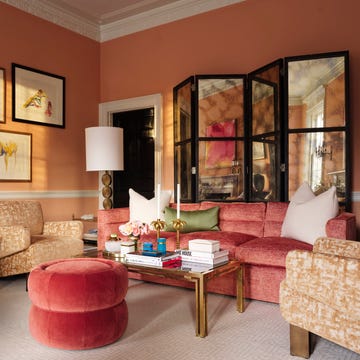
By layering different materials throughout the space, you’re ensuring that your living room doesn’t feel one-dimensional, even if your colors are monochromatic. Designer Ali Henrie especially loves doing so with natural materials and textures, like wood, linen, wool, and velvet, as it makes these spaces feel collected rather than styled.
She explains that “timeless design is about restraint, materiality, and following the architecture.”
Self-Control

Just because you have room to add more decor doesn’t mean you necessarily should. Be thoughtful with how items are displayed to ensure nothing feels random.
“When every piece has a place, even something unexpected can belong without tipping the room into feeling overdone,” designer Vanessa Katzen explains. This attention to detail when picking out the smaller decorative pieces for your living room can allow this room to slightly shift over time while keeping foundational items—sofas, tables, rugs—the same.
Intentional Lighting

Simply choosing a gorgeous central chandelier or pendant light and sticking with only that isn’t going to cut it when making your living space feel enduring. Mindy Kelson O’Connor argues that a thoughtful lighting scheme is perhaps the most timeless investment a living room can have. Begin with that central light fixture to anchor the space, then move out and layer in sconces and recessed lighting along the perimeter, creating a sense of warmth and envelopment. If you have artwork you want to highlight, don’t forget to add in picture lights, too.
“Finally, intersperse floor and table lamps generously throughout,” she adds. “Beyond their practical function, lampshades present an opportunity to weave in an additional pattern, texture, or color, reinforcing your palette or offering a considered moment of interest. A room that is beautifully lit at every hour is, without question, a room that endures.”
Thoughtful Little Details

“One of my favorite places to see thoughtful detail that evokes a sense of timelessness is in curtain trimmings and custom lampshades that fit just right,” explains Kelly Zerbini of Dunnam Zerbini Design. Though these details might not announce themselves, they add to the overall level of care and richness one puts into the room. These small, important additions emphasize the importance of timeless layers.
Nuanced Approach to Color

Though you might be inclined to paint your living room the hottest color of the year, a certain hue will likely feel outdated and overdone rather quickly. If you really love it, then go for it, but you should take a more nuanced approach to the main color palette if timelessness is important to you.
“Wall color or wallpaper should establish a mood that can adapt gracefully to changing light—both natural and artificial—as well as seasonal shifts,” designer Sarah Magness says. “A well-chosen palette has depth and flexibility, allowing it to feel warm in winter light and fresh in summer brightness.” Adaptability is a main characteristic of ageless and elevated design.
Patina, Patina, Patina

Since you want your living room to endure the tests of time, the materials you use should also be able to age gracefully, not just stay fashionable over the years.
“I look for 'living finishes'—materials like brass, honed marble, or velvet that develop a unique patina over time,” Chad Dorsey says. Plastic technically lasts, but it typically doesn’t show its age well. The pieces you pick should only get better with age.


Multifunctional Furnishings

The living room you have when you first move into your home will likely not be the living room you need years later. Kids, new jobs, new hobbies, and friend groups—certain things that shape your life might make it so the living room you used to love isn’t cutting it anymore, which is why designer Lindsey Walsh thinks multifunctional furniture is necessary to timeless design.
“Flexible yet stylish pieces, like a great game table, can be used for mahjong, a homework desk, or a dining table,” she says. “Items that can evolve with you feel enduring because they support how you live, rather than offering a single use that may become irrelevant after some time.”
Conversational Seating

Along with multifunctional furniture, the layout of your seating should be functional as well.
“It's important to consider the conversation grouping when creating a living room with longevity,” designer Leslie Banker explains. Think about the distance between seats when laying out your floor plan—no one wants to be yelling across the room to each other.
Table access is another important aspect to remember, as everyone should have somewhere to comfortably set their drink. Banker suggests including “some smaller, lighter ottoman, footstools, and chairs that can easily be pulled up to the conversation” in your own home if you don’t know where to start.
One-of-a-Kind Art

Michelle Murphy of DEMI RYAN always suggests to her clients that they invest in one-of-a-kind artwork for their living room. It doesn’t just make the room feel ageless but also irreplaceable.
However, you can’t stop there: the way you light the piece is just as important.
“A museum-quality picture light or a carefully aimed recessed fixture trained directly on the piece transforms original art from something you notice into something you cannot stop looking at,” Murphy says. “It creates depth, drama, and a focal point that anchors the entire room.”
Architectural Details

A living room without some interesting architectural detail is like a kitchen without a backsplash—it just feels flat and lacks interest.
“Built-ins, paneled walls, and thoughtfully centered focal points create a sense of order that feels inherent to the home rather than applied,” says Trish Lynn of Colette Interiors. “This kind of structure gives the room a quiet permanence, allowing furniture and styling to evolve over time without ever disrupting the overall balance.”
Vintage Touches

“I think timeless spaces almost always contain something with history,” says designer Lindsay Lucas of Lindsay Laine Home. This goes hand-in-hand with Dorsey’s patina rule, though rather than materials that age well, Lucas is focusing on specific furnishings, like rugs, tables, cabinets, and shelves. The depth and permanence these pieces bring aren’t something you can often replicate with new items.
“The rooms that stand the test of time usually feel evolved, not installed,” she adds.
Natural Wood

Beautiful, high-quality wood never goes out of style, says Heidi Houdek, though certain stains may. When choosing natural wood pieces for your living room, it’s important to choose a stain or tone that doesn’t feel too “of the moment,” otherwise, you risk hating it in a few years, like honey oak.
Either way, wood tends to pair well “with almost any design style, whether the space leans more modern, traditional, organic, or eclectic,” she adds. It invites warmth into your living space and helps ground the room.