5 min read
Your coffee table is a central, grounding piece in your living room, but it’s one that’s easy to get wrong. Often, the style pendulum swings too far in either direction, and it’s either overloaded or left too bland. You can go a bit further than a lone remote control, but you don’t want to overdo it with knickknacks. Crafting the right coffee table for your space needs a delicate touch, so we consulted the experts to find the secrets to a great look.
“The idea is to keep it simple enough for everyday life but elegant enough for guests to fall in love when they visit,” interior designer Esther Ruth Ellard says. There’s so much to consider: the right material, how many (or how few) objects to put on top, if one is enough, or if you need two smaller tables. Remember that many coffee tables are high-traffic spaces, so it doesn’t have to look catalog-ready at all times. But there’s a way to style it so it’s both inviting and practical. Below, find tips from interior designers on building your dream coffee table from the ground up.
Winning Formulas
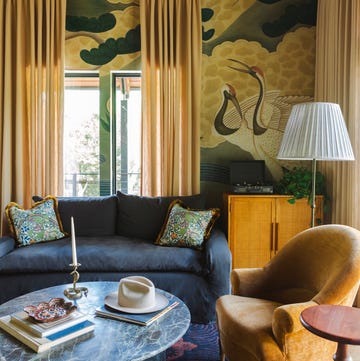
If you prefer a rule of thumb to follow when styling your coffee table, take a page out of designer Kathy Kuo’s book. Her loose formula goes as follows: one decorative tray, at least one stack of design or art books, one organic element, and one or two pieces of decor. From that baseline, you can customize to your heart’s content.
Your organic element can be anything from fresh (or faux) floral to a pretty piece of coral. And your decor can play with height, like placing a taller sculpture next to a mini cordless lamp.

If you’re still confused about where exactly to place things on the coffee table, use Ellard’s zone system. She divides every coffee table into three to four zones, and styles mini vignettes within each zone.
“In one zone, you can have tall candlesticks—always a must-have in my opinion,” Ellard says. “In zone two, you can have a low stack of decorative books that reflect your personality. Zone three may have a glass or textured vase with fresh or faux florals that hit the mid-level height. If you have a zone four, then you can opt for a textured tray that speaks to the room's aesthetic.”
Corral the Clutter
When in doubt: grab a tray. A decorative tray that plays off the room’s aesthetic can upgrade even the most bland coffee table. It can hold all of your decor in one gathered place.
“We like to start with a stack of books or a tray that ties into the room’s color palette,” says Paige Loperfido of Decor & More Design Studio. “Everything doesn’t need to match, but keep tones in the same family (warm neutrals, soft contrast, etc.) so it feels intentional.”

Designer Jan Odesanya points out that when you’re filling your tray, you want the heights of various objects to form a triangle shape. “If your tray is smaller, you could group your coffee table books adjacent to it, and then even place a smaller tray on top of them for a plant or a candle,” Odesanya says. “An interesting, smaller object always looks good here, too.”
If a tray isn’t your style, add a few decorative boxes. This keeps all your coffee table mainstays—coasters, remote controls, reading glasses—easy-to-reach, but not scattered and cluttered. Follow the same principles: play with height, and look to the rest of the room for a complementary color. “Remember, don't plunk down everything in the center of the table,” designer Laura Medicus says. “Also, the box of tissues and the dog's vitamins do not belong on this table. Edit and curate.”
Material Matters

The material that the actual table is made of makes a big difference. You don’t have to stick to wood; there are plenty of stone, marble, metal, and even glass options to choose from. But whatever you go with will change how you style it. “Glass disappears, which means it needs grounding or it reads as an afterthought,” Odesanya says. “Wood and stone already carry their own weight, so they need you to get out of the way.”


Tina Guevara from Juliette Sebastian Interiors selects the pieces for a coffee table based on contrast. So don’t place a clear vase on a clear glass table—opt for a colored ceramic vase, which you would see more clearly from afar. On a wooden table, Guevara uses materials like metal and stone for a maximum statement.
Don’t forget that the shape of the table makes an impact, as well. A round or organic shape would likely soften the space and make it a bit more approachable. A rectangular or square table adds presence, but “will expose a weak arrangement immediately,” Odesanya says.
Keep It Interactive and Personal

A coffee table isn’t as decorative as a china cabinet, so the pieces on top shouldn’t be things you don’t have a connection to. Don’t rush to fill the surface. Negative space is your friend. Over time, you’ll collect new pieces you’ll want to display. And in the meantime, there’s space for feet to be propped up or snacks to rest.
“I would rather see a table with a few great pieces versus a surface filled with a cart-full of spontaneous big-box store shopping spree nonsense bought just to fill the space with stuff,” says Ashley Powell of Roseberry Allen.

Powell even puts this personalization into practice at home. She styles her own coffee table with items that reflect what she does and where she has been. “Bringing in elements of nature like found seashells from beach vacations over the years not only adds visual interest, but it reminds you of special memories made and makes for great conversation when entertaining,” Powell says.
Don’t Forget the Rest of the Room

One common coffee table mistake Odesanya sees people make? Treating it like it's the only thing in the room. If all of your effort is concentrated on the table itself, it might look out of place. Your coffee table should connect back to other features of the room, from the materials to the colors. If not, “it ends up performing for an audience that doesn't exist,” Odesanya says. “The fix is simple, but it requires looking up. Let the table echo something already in the room: the sofa, the rug, the shelving.”

Space planning is also key. If your coffee table feels too big for your space, it’ll stick out like a sore thumb. If you are working with a small space, two smaller coffee tables might be a better fit than one sprawling table. “A good rule of thumb is that you need 18 inches between your sofa and your table, so if the constraints of the room don't allow for that, then you might want a grouping that makes the flow easier,” designer Kati Curtis says.
The overall aesthetic of the room is a great guiding light for your coffee table. It comes together to tell a story of how the room should be enjoyed. Is it party central, or meant for quiet reflection? Let the pieces on your coffee table explain that, from a deck of cards for game night to candles and match strikers that set the mood.