3 min read

Blair Moore’s love affair with interiors began, fittingly, in childhood. Before she was infusing homes with a sense of history and place, she was growing up in the most iconic location of all—a working cattle property in Australia. Outside, the horizon stretched wide and wild, but inside, the home was cozy and intimate, layered with an inimitable combination of love, family lore, and patina.
“My grandmother wore RM Williams boots dusted with red earth, yet inside the house, there were embroidered French linens, English joinery, polished silver, and rooms that she collected over the years,” says Moore, founder of Moore House Design. “It felt cinematic for me when I was younger, like living inside The Man from Snowy River, but what stayed with me was the contrast.”
That early exposure to duality—ruggedness tempered by refinement—still underpins Moore’s work today, allowing her to shape spaces that feel disciplined, yet deeply personal. “I didn’t have language for it then, but I understand now that I was absorbing a design philosophy,” she adds, “that a space can be both grounded and elevated, hardworking and poetic.”


While Moore’s path to interior design wasn’t linear, it does feel somewhat inevitable. She began her career in fashion, drawn to the precision of construction and the meditative rigor of the craft, skills she would later find translated seamlessly to interiors. “I didn’t leave fashion,” she explains. “I just expanded the scale.” That evolution, spurred on by a childhood spent watching her father renovate homes with a respect for architecture, found her collaborating with friends to design their apartments. “I realized I wasn’t just interested in how something fit the body; I was interested in how a space holds a life,” she says.
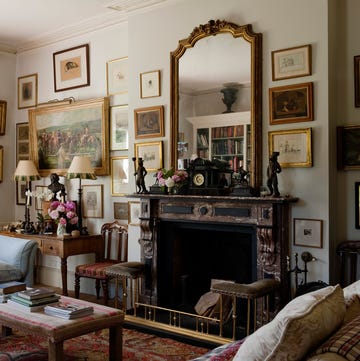
Today, Moore’s interiors reflect that same reverence for structure and story. While her work is beautifully layered and effortlessly collected, there’s a deeply architectural backbone beneath it, one defined by rigorous documentation, bespoke collaboration, and a belief that beauty is only as strong as the systems supporting it.
Several years into her practice, Moore is thinking less about momentum and more about permanence. With her furniture line, ROWEAM, and an ever-expanding portfolio, she’s defining what success looks like in her next chapter. “I want to do meaningful, rigorous work with incredible clients in places that inspire us,” she adds. “I’m less interested in designing for the moment and more focused on designing for generations. On creating spaces that feel rooted, collected, and lasting.”


Get to Know Blair
House Beautiful: What do you think the industry gets wrong about “good design”?
Blair Moore: I think the industry sometimes equates good design with immediate visual impact. But truly good design isn’t about what photographs well, it’s about proportion, restraint, and longevity. It’s about how space holds you over time.
HB: What’s a hill you’ll die on when it comes to interiors?
BM: If it can’t age, it doesn’t belong. Everything added to a home should evolve with it; materials should patina, finishes should deepen, and hardware should soften with touch. I’m deeply resistant to anything that feels static or disposable. Interiors to me are meant to gather history, and permanence is about integrity. A home should become more itself over the years, not less.
HB: Describe a recent project that best captures your voice.
BM: The office in our Connecticut Captain’s Cottage project feels like a pure expression of our voice. It’s wrapped in deep, custom wood paneling that’s tailored, architectural, and quietly dramatic. The proportions are disciplined, the detailing intentional, and the furnishings layered with patina and sculptural restraint. Nothing about it is temporary—it’s a room that will only get better with time.
HB: What’s the smartest inexpensive decision you’ve made in a luxury space?
BM: Leaving space. In luxury interiors, not filling every corner is often the smartest decision. Restraint allows materials and architecture to speak, and that costs nothing.
HB: What’s your dream brand collaboration?
BM: A collaboration with a hospitality group rooted in landscape—something in Wyoming or rural Australia where architecture, craft, and terrain intersect.