

 7 min read
Pictured above: This neat-as-a-pin kitchen pantry, designed by Meta Coleman, provides instant organization inspiration.
It's easy to fall into an organizing and cleaning rut. You stick with the same tried-and-true tidying routine, only to look around and realize the problem isn't how you're cleaning but how much stuff you're trying to manage. When that happens, it's worth turning to the experts for a fresh perspective.
We asked a handful of professional organizers to share the habits, clever systems, and little-known tricks they rely on to keep their homes feeling calm, organized, and clutter-free—not just after a deep clean, but every day. Read on for their best organizing hacks.
Additional copy by Meghan Shouse.
Start With Your “Farm Chores”

Diane Lowy, founder of New York at Home, has a system that might sound familiar. “In our house, we call it ‘farm chores,’” she explains. These are 15 minutes of tasks, done once or twice a day, that keep everything running smoothly. This includes putting the dishes in the dishwasher, folding clothes, taking stuff to the recycling, and putting items back in the right room.
“I think of it as being a present to yourself,” says Lowy. “By spending 15 minutes in the morning and 15 minutes at night, you wake up to a nice place that’s ready for you to enjoy. That’s something everyone can do, and it really makes a big difference in terms of feeling like your life is put together.”
Make the Mundane More Beautiful
In order to love where you live, Lowy says to consider how to make “those mundane moments that happen every single day more pleasurable.” She focuses her efforts on upgrading utilitarian items, like choosing an aesthetic broom or a functional yet pretty basket to store the dog’s toys in. Her recent favorite find? The Evermill spice rack.
“It’s really pretty spice containers that sit on your counters, and the jars have a wide mouth, so you can kind of pinch it or you can put a tablespoon in and you don’t have to dig in there,” she explains. In addition to having an aesthetically pleasing and streamlined countertop, the chic spice jars “just make me enjoy cooking more,” she says.
Try Seasonal Swapping

Closet space is a constant challenge for most. To keep her wardrobe organized, Faith Roberson of Organize With Faith is a big proponent of seasonal swapping. “There’s something about pulling out winter stuff or summer stuff at the top of the season that’s really exciting to me and makes me feel like I have new clothes,” she says. To keep the process seamless, Roberson stores out-of-season garb in fabric boxes in her closet.
Opt for a Lazy Susan
After 13 years in the decluttering biz, the only product Roberson can't live without is a lazy Susan. This handy tool can also corral easy-to-miss condiments in a refrigerator or to store laundry detergent above a washer-dryer. It can also help her remember to take her vitamins.
“I always forgot to take them when they were in my cabinet,” she says. "Now I put them on a lazy Susan in my refrigerator." With her jars front and center, Roberson can easily grab them post-breakfast.
Partake in Frequent Purges

Decluttering a client's house is like a reality check, says Roberson. She's always inspired to go home and get rid of her own clutter. “I’ve made it a part of my lifestyle because it’s so easy to have too much stuff,” she says. For Roberson, it's an ongoing process that happens weekly, so that unwanted stuff doesn't build up. Before grocery shopping, she’ll go through her refrigerator, empty it, wipe it down, and prepare for the new foods.
When swapping clothes for the new season, she’ll go through and ask, “Do I want to be out in the streets wearing this this season?” If not, it gets donated. Roberson also has a system she calls “shop with intention.” As she’s getting rid of items, she’s creating a list on her phone of what needs to be replaced. “So I’m not just shopping on a high,” she says. “I’m really clear on what I'm doing.”
Don’t Keep More Than You Can Maintain
Ultimately, Roberson says to get rid of things when you have more than you can maintain. “I have this saying, ‘Keep what you can care for,’” says the expert. Meaning, if you’re not keeping up with the maintenance of your stuff, like your laundry or repairing your bags when the handles are torn, then you have too much.


“There’s nothing worse than just shuffling around and organizing a bunch of stuff you don’t need,” she says. “It’s just polluting your space.”
Designate a “Throw Out” Area

Lowy agrees that an exit strategy for unwanted items is key. “One-click shopping has made getting things into your home a lot easier, but getting things out of your home is super analog,” she says. Her tip: Create a designated area for items that need to go, preferably by the door.
“I have a bench that I use when I take my shoes off,” says Lowy. “It’s a little longer than it needs to be because I keep things on the bench that need to go out.” This includes clothes that have to go to the tailor, shoes that need repairing, or that bowl you’ve been meaning to take to Housing Works. “Have a spot for the things that are leaving so that nothing piles up, and it doesn’t become this big thing,” she adds. “The secret of keeping your home clutter-free is forming a habit of getting things out of your home regularly.”
Involve the Family
Reset Your Nest founder Jen Martin and her husband both work full-time, so managing their household, which includes four kids, one dog, one hamster, and a fish, required Martin to really put systems in place. Her advice? Get the kids on board. “I have labels everywhere to show them where things go,” says Martin.
Another way the kids pitch in is with food storage. The kids are in charge of decanting the most-consumed grocery items, like cereal and rice. “It gets things out of packaging so it looks pretty but also makes it easier for my kids to see the options,” she says. When something is low, there’s a list on the side of the fridge. “Mom and dad work full-time, so if your favorite snack is getting low, it’s your responsibility to add it to the list.”
Be Ruthless Regarding Unwanted Toys
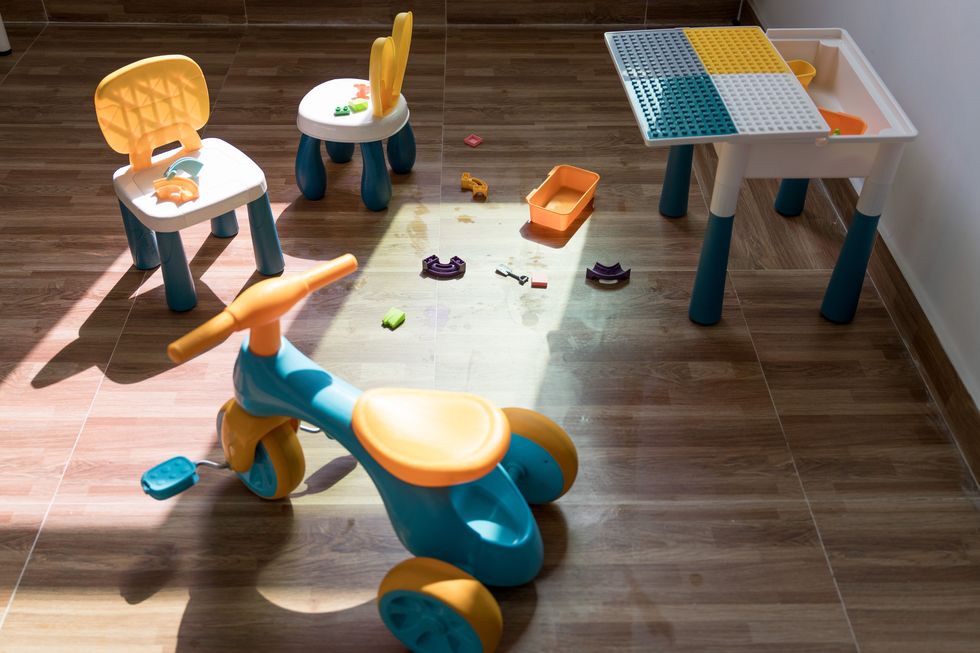
Kids collect too much stuff. “It's hard because you're not always in control of who gives it to them, and for some family members, that’s their love language,” says professional organizer Beth Penn of Bneato Bar. For those plastic-filled goodie bags and obnoxiously loud fire trucks, she has a plan.
“I purge often, and often without their permission,” says Penn. The expert keeps an empty cabinet for those moments: “When they bring in stuff that I'm like, ‘Oh no, we'll not be finding a place for this to live.’” Once a bag in the cabinet is full, she’ll take it to its appropriate place, whether it’s trash or donation. By using this method, the unwanted clutter doesn’t get a chance to merge into the house.
Try to Have Fun With It
Home organizing doesn’t have to be a drag. “My favorite fun hack is to create custom and very, very specific labels,” says Ryan Eisland, who cofounded Home Sort with her sister Brandie. “For example, in my daughter's room, I have a label that says, ‘Laney’s Clothes That She Loves and Mom Doesn’t.’ In my other daughter’s room, I have a label that says, ‘Lorna’s Hobbies That She Was Really Into Then Abandoned.’ They are fun and make us laugh while at the same time they help keep things organized and let everyone know where stuff is located.”
Another tip Eisland uses is to get creative and whimsical with storage. “My older daughter is a big crafter and loves unique, vintage treasures,” says the professional organizer. So when it came time to set up her room, Eisland turned to vintage stores to find unique baskets, like a French linen farmhouse bin for under her bed, that give her space a more eclectic feel.
Control Your Mail

It’s natural to think of organizing in the context of the things already in your house, but it should also extend to items coming and going. Mail and packages can quickly lead to chaos and build up, so it’s important to have a system for processing and putting away (or trashing) these items.
Penn, who doesn’t have a traditional office in her house, uses these pouches with clear pockets to hold mail or to-dos that are waiting to be processed or looked at. They live on the inside of a kitchen cabinet door, held by a Velcro 3M Command strip. “This way stuff doesn’t get stuck in a pile somewhere,” she says. “It’s put away, but as soon as I open the cabinet, I can see it.”
Don’t Focus on Perfection
“I’m moving the needle,” is the mantra that Penn says to herself when she’s piling things in the hallway for family members to take to their appropriate rooms. “Sometimes we feel like it has to be this big effort for it to make an impact, but it doesn’t,” she says. Just the tiny act of picking up before bed can prevent you from descending into chaos the next day.
And then there’s lowering expectations. Sure, you can have an Instagram-worthy home if you spend all your time working on it or have a staff that includes housekeepers, nannies, and assistants, but that’s not exactly realistic for most people.
“That's something I've had to learn,” says Penn. “Sometimes emails don’t get returned, and toys don’t go into the appropriate bin. I have two children and have gotten older, and the projects of life add up. You have to let some stuff go.”


