
 4 min read
There are certain plants, like the money tree, that are associated with good fortune, and the lucky bamboo plant (Dracaena sanderiana) is one of them. This tropical plant—which actually isn’t true bamboo and is related to asparagus—originates from areas spanning West Central Tropical Africa to North East Angola, but it’s surprisingly easy to take care of as a houseplant, no matter where you live. In our lucky bamboo plant care guide, you’ll find out why this resilient and charming plant is a serene addition to any home.
“Lucky bamboo is not only aesthetically pleasing, but it’s also known for its ease of care, making it ideal for both gardening novices and enthusiasts,” Samuel Davis, CEO of London Gardeners, says.
Read on to learn everything to know about growing and caring for this lucky houseplant.
Additional copy by Meghan Shouse.
The Meaning of Lucky Bamboo Plants

There’s a reason why a lucky bamboo plant is considered, well, lucky: In traditional Chinese culture, it is believed that having (and gifting) bamboo can bring good fortune. However, this plant isn’t a one-size-fits-all situation. According to Chinese tradition, the number of stalks on your lucky bamboo plant signifies good fortune for different areas of your life.
- Two Stalks: Love
- Three Stalks: Longevity and Joy
- Five Stalks: Harmony and Balance
- Six Stalks: Wealth
- Seven Stalks: Health
- Eight Stalks: Development and Growth
- 21 Stalks: The perfect blend of harmony, wealth, health, happiness, love, prosperity, and good fortune.
Avoid bamboo plants with four stalks. In Chinese tradition, the number four symbolizes death and is considered a bad omen. (Translation? A lucky bamboo plant with four stalks isn't so lucky!)
Lucky Bamboo Plant Care Guide
In addition to being incredibly resilient—this is one plant that is really hard to kill—it’s also pretty easy to care for. It grows best in USDA Plant Hardiness Zones 10a and 10b.
Sunlight and Water
“It thrives in indirect sunlight and requires clean, purified water without chlorine—a simple change that ensures its health and vitality,” Davis adds. “We recommend changing the water every two weeks and using a pot with ample drainage to prevent root rot, which is a common issue with this plant.”
Fertilizer
If you want to really double down on your plant health, add a weak liquid fertilizer, according to the NC State University Extension. That said, you should stop using fertilizer if your bamboo’s leaves begin to yellow.
How to Propagate a Lucky Bamboo Plant
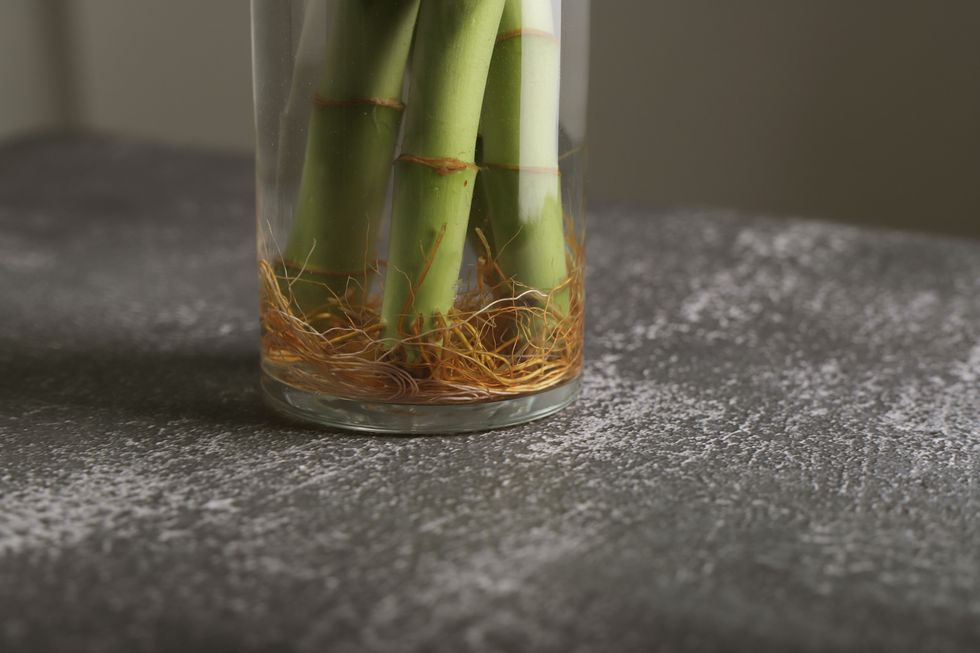
Though lucky bamboo plants can last a long time, you might notice that older ones can get a little limp and straggly over time. Don’t worry: You can keep the good fortune alive by propagating.


To start, cut a healthy main cane from your existing plant and remove any superfluous leaves. Place it in a cup with a few inches of water, and wait until it produces roots. From there, you can plant your new lucky bamboo plant in a different container and watch it grow.
Are Lucky Bamboo Plants Toxic?
Lucky bamboo plants should not be consumed. Not only is this plant toxic to pets, but it also contains saponins, which are somewhat poisonous to humans. (In fact, the NC State University Extension says ingesting these plants can result in vomiting, depression, and hypersalivation, among other symptoms.) To err on the side of caution, keep your lucky bamboo plant on a shelf, far away from small hands and mouths.
Lucky Bamboo FAQs
Do Lucky Bamboo Plants Grow in Water?
Well, it depends on who you ask. “It’s often grown just in a vase of water, but it grows equally well in potting mix,” Justin Hancock, Costa Farms horticulturist, explains. “If you keep it in a vase of water, it’s helpful to rinse out and wash the vase every month or two to help prevent algae growth.” Meanwhile, others say that adding pebbles or small stones to your planter can help keep it upright.
Where Should I Put Lucky Bamboo in My House?
Indoor lucky bamboo plants prefer spots that get a moderate amount of indirect sunlight with an average to above-average relative humidity. Or, as Hancock puts it, “If you’re comfortable, it probably is too.” Consider placing your bamboo plant on a bookshelf or in your living room, bedroom, or home office.
Can You Put Your Lucky Bamboo Plant in Direct Sunlight?
Generally, bamboo plants do best in slightly shady areas or indirect sunlight. While you can try to place them somewhere brighter, you’ll want to keep a close eye on them. “If you see the stalks start to turn golden yellow in color, it often means it dried out,” Hancock explains. “Unfortunately, once the stalks go yellow, that stalk will not recover.”
How Long Does Lucky Bamboo Last?
Lucky bamboo plants are perennials, according to the NC State University Extension, which typically means a plant returns season after season. Lucky bamboo will live for more like one to two years, or longer if it’s planted in soil instead of grown in water.


