4 min read
Avocados are beloved not only for their creamy texture and mild, versatile flavor but also for being a heart-healthy superfood, rich in monounsaturated fats, fiber, vitamins, and minerals. If you really love them and want to keep them in the house at all times, you might consider growing your own avocado plant from seed. So, the next time you slice into one for avocado toast, don’t be so quick to throw away the pit. With a little patience, that leftover seed can become a thriving indoor plant and a rewarding gardening project.
If you're interested in learning how to grow an avocado seed plant, you'll be happy to know that the process is fairly simple—although you won’t get to enjoy immediate payoff. Unlike many edible plants that can be grown from seed and harvested within a single season, avocado trees take much longer to mature. According to the California Avocado Commission, a tree grown from seed may not produce fruit for anywhere between five and 13 years after planting. However, the long wait doesn’t make the project any less worthwhile. An avocado seed can develop into an attractive, leafy houseplant that adds greenery and liveliness to your home.
Another aspect of growing avocado plants from seed is that for much of the United States, these plants will need to remain indoors or be planted in a pot that can be moved indoors and out as the seasons change. Avocado plants can be grown outdoors in USDA Hardiness Zones 9–11, which covers parts of California, Arizona, and Texas, along with most of Florida, Hawaii, and Puerto Rico.
Whether you're curious about how to grow an avocado seed plant for fun or with hopes of one day growing your own tree and harvesting the fruit, understanding the right planting methods and care requirements is key. Below, we’ll cover everything you need to know to successfully grow an avocado seed plant and keep it healthy as it develops.
Additional copy by Kate McGregor.
Everything You'll Need to Grow an Avocado Plant
- Avocado pit
- Toothpicks
- Drinking glass or narrow vase
- Soil
- 10-inch pot with drainage holes
- Trowel or large spoon
How to Grow an Avocado Plant
As aforementioned, it can take years for an avocado tree to bear fruit, but this process will give you a beautiful (and essentially free!) houseplant to enjoy in the meantime. Plus, it's a fun science experiment to watch a seed sprout.
Step 1: Prep the Pit
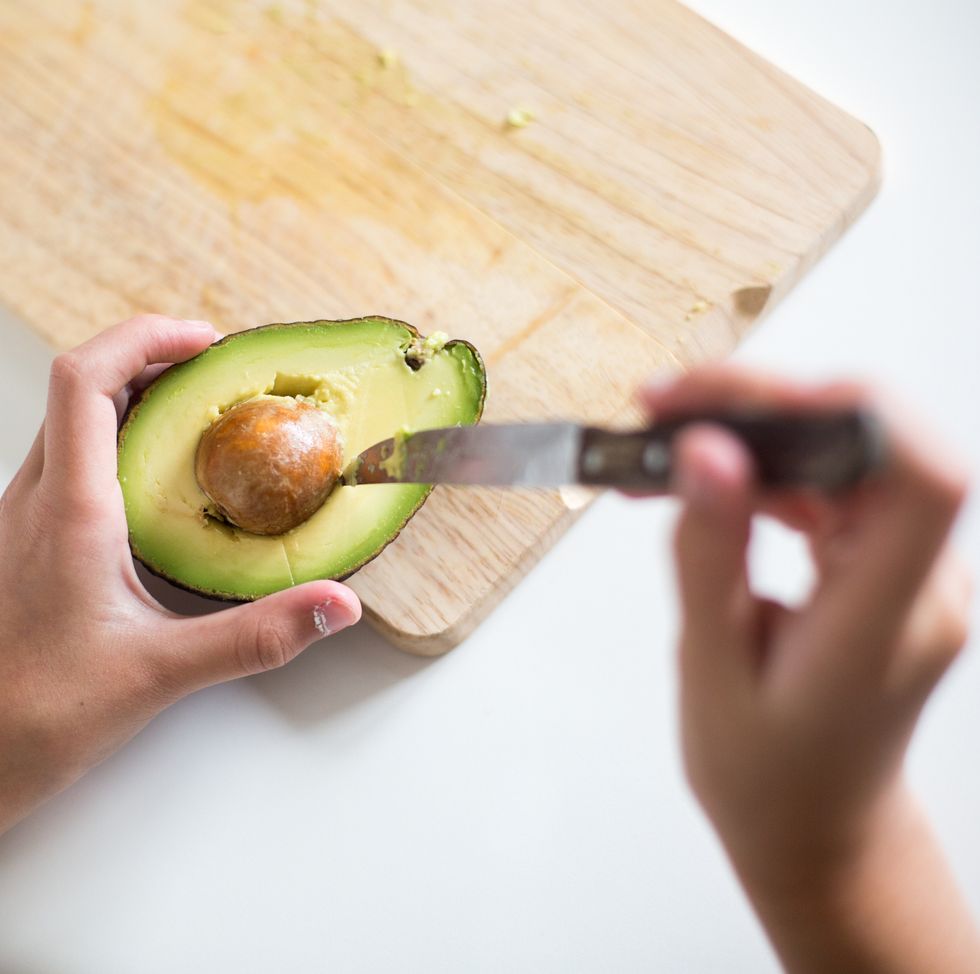
Cut an avocado in half, remove the avocado pit, and set it aside. Give it a good rinse to remove any residue, then let it dry. Meanwhile, fill your vase or drinking glass with water.
Step 2: Insert Toothpicks
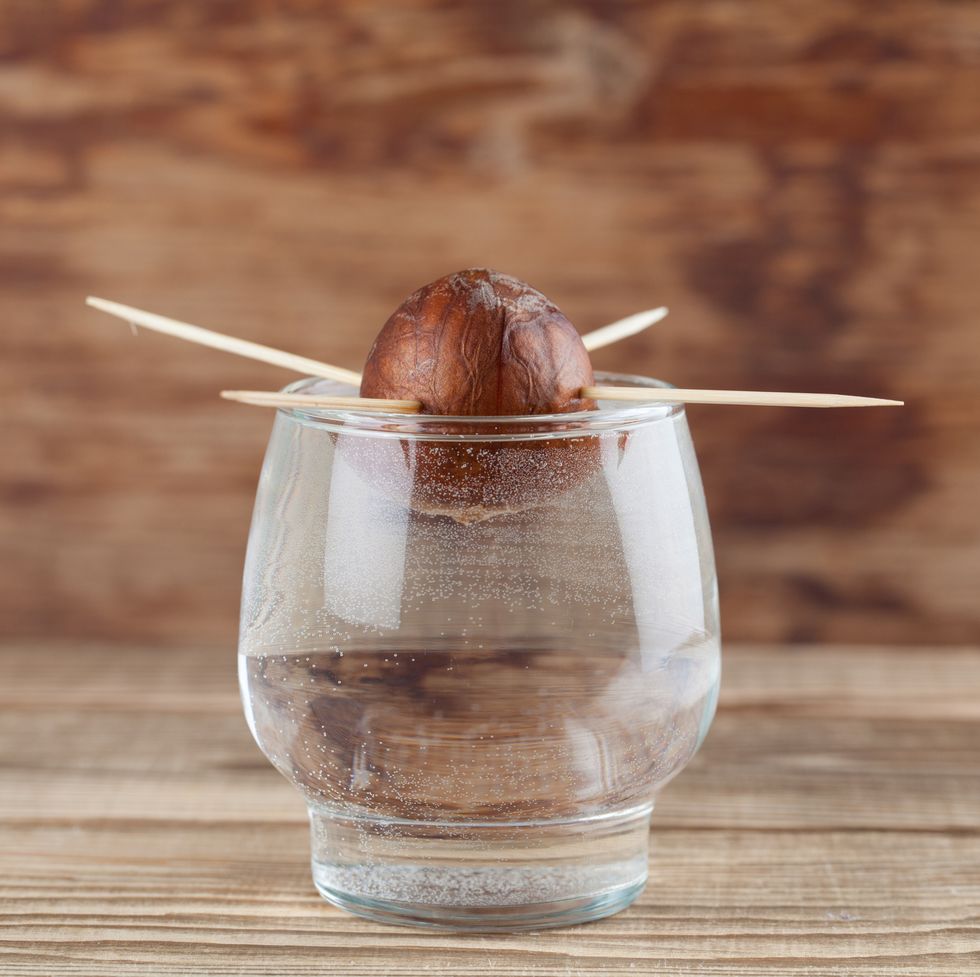
Push three toothpicks about an inch or so into the pit, spacing them evenly. Then, place the avocado seed on top of the glass so that it's balanced on the toothpicks with its bottom half submerged in the water. Add water if needed.


Note: If you have a vase specifically designed for avocado pits, you can skip this step.
Step 3: Give the Pit Time to Sprout
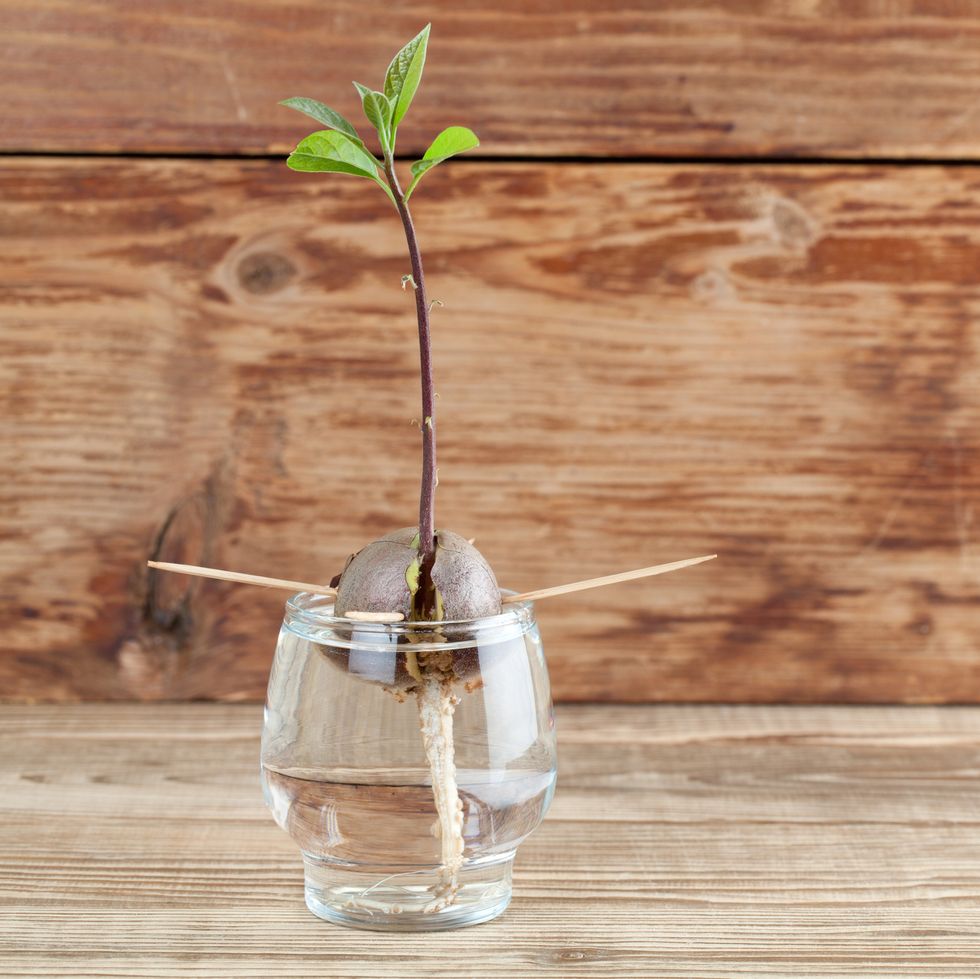
Once the pit is properly suspended, place your glass in a warm, fairly sunny spot like a windowsill. Remember, avocado trees grow best in hotter climates, so bright, indirect sunlight is key. Your pit should start to sprout roots and a stem in about six weeks. Replenish the water as needed to keep the bottom half of the pit submerged. Once the stem grows to six or seven inches, trim it in half.
If you don't see it sprout after about two months, consider it a dud and start over with another pit.
Step 4: Plant It in Soil
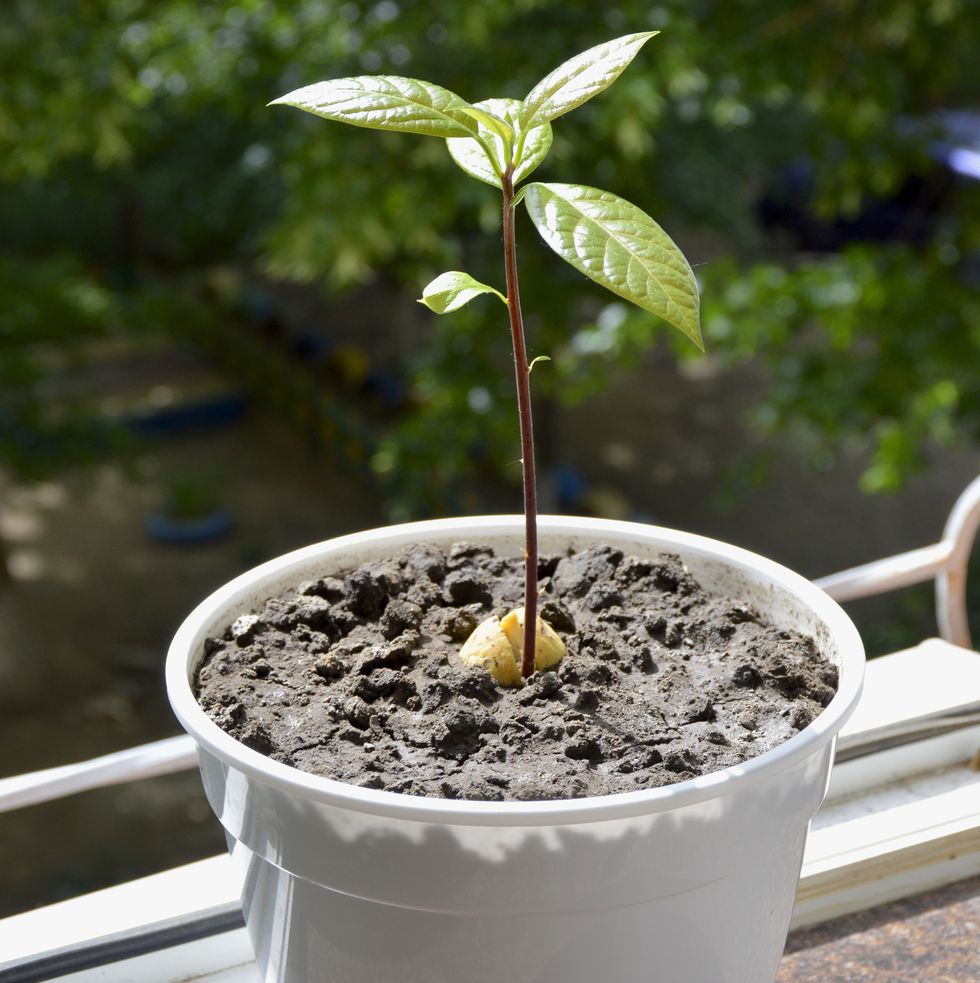
Once the roots have grown in strong and thick and the stem has sprouted leaves, it's time to transplant your avocado seed plant to soil. Plant it in your pot as you would any standard houseplant, using rich, well-drained soil and a trowel or large spoon, but be sure to leave about half the pit exposed above the soil line.
Avocado plants love their soil moist but not drenched. As with most houseplants, water it only when the soil dries out completely, and be sure to plant it in a well-draining pot to prevent root rot.
Keep monitoring the avocado plant’s progress and repot it in a bigger container if you sense that it’s outgrowing its original vessel. If you are intending to plant the avocado tree outdoors once its roots are established, know that this is only recommended for USDA Hardiness Zones 9–11. Otherwise, keep it in a pot indoors or move it out to your patio during the warmest months of the year to keep it happy.